Blog Details
September 15, 2026By Innovatex Team2 min read
Why We Build Offline-First Apps for India
Many apps assume a fast, permanent internet connection. In India that is often not true: lifts, basements, trains, rural areas, prepaid data running out, or a phone shared in the family. When an app shows a spinner or an error in those moments, people stop using it. That is why most of the apps we build are offline-first.
What offline-first means
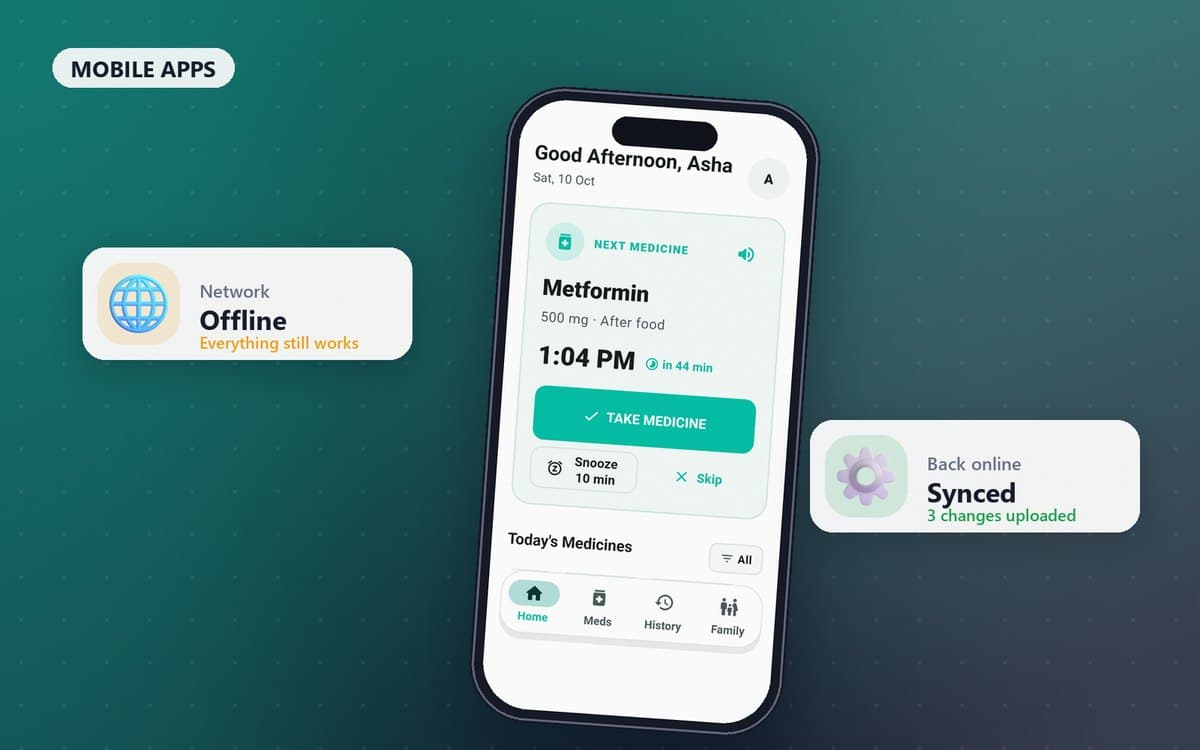
The app keeps its main data on the phone and works fully without a network. When a connection is available, it syncs in the background. The phone is the source of truth for the user; the server is a backup and a way to share.
Where it made the difference
- DoseWise, our medicine reminder: reminders must ring on time, every time. The schedule and history live on the phone, so a missed network never means a missed dose. Optional cloud sync lets a caregiver see progress.
- Ankur, our children's app: everything, including stories, sounds and pictures, ships inside the app. Parents can hand over a phone with no data and nothing breaks. It also means no data ever leaves the device.
- Khelora Ludo and our party games: families can play anywhere, on a journey or at a wedding, with no login and no waiting.
The benefits go beyond "no network"
- Speed. Reading from the phone is instant, so the app feels faster everywhere.
- Reliability. Fewer moving parts at the moment the user needs the app.
- Lower costs. Less server traffic and smaller hosting bills.
- Privacy. Data that never leaves the phone cannot leak from a server.
What to plan for
- Sync and conflicts: decide what happens if data changes in two places.
- Storage: keep the app size and on-phone data reasonable for budget phones.
- Updates: plan how new content reaches users who rarely connect.
Offline-first takes a little more thought at the start, and pays back in happy users. If your app's users are on the move, in smaller towns, or just short on data, let's design it to work everywhere.